The year I ran away
we are so back with another oversharing but musically rooted personal story from a decade ago

"Walking through unfamiliar streets / And I'm shaking unfamiliar hands / And I'm hearing unfamiliar laughs / And lovely language I don't understand / It's late October in Copenhagen"
- Lucinda Williams
On June 7th, 2015, I woke up in a panic: my first session at a recording studio was in two hours. I printed charts for my friends, packed them into my upright bass case, and took the SkyTrain to Nanaimo station, headed to Monarch Studios. With Thad Bailey-Mai on trumpet, Jonny Tobin on piano, and Bobby Wiens on drums, I recorded four pieces: "Being Bill", "Stop Me If You've Heard Enough", "Nomads (Intro)", and "Nomads". We did three, four, five takes of each. As an addition, Jonny stuck around for the last hour and played "Sitting to Her Left" with me in one take.
That's five of the eight tracks on my first album. It's the music I told you I wrote after meeting Bill Frisell at Capilano University:
"I think in the 24 to 48 hours after that concert [by Frisell], I wrote all the music of Aim to Stay."
But that isn't entirely true: the album has three more tracks which didn't result from Frisell's concert. One of them, "Makie Elkino", was the first tune I ever wrote. I ended up recording it a year later, with one band member different, in a second date at the same studio.
That leaves the title track and another tune. I wrote those two in a basement in Copenhagen, the city to which I ran away on August 4th, 2015. I stayed there for three months then flew home pretty much exactly ten years ago.
When I noticed this anniversary coming up, I realized you probably don't know I did that. And for the special few of you who were around, I want to tell you about it from my current view.
First, however, we have to discuss a nearer place I went that year. Because while my pre-jazzfest confessional was soundtracked by Frisell, this one stands on the music of Lucinda Williams.
I entered 2015 introducing myself as William Ross, replacing my last name with my middle name. More than 12 months had passed since I'd dropped out of CapU. I lived at home with my mum and played as many jazz gigs as I could, which means I was unemployed, except for that plus the regular activities of the North Shore Celtic Ensemble.
On February 4th, I took an Amtrak down to Bellingham to hear a show presented by the Whatcom Jazz Music Arts Center. It was a Wednesday, and I did it because I could. Local drummer Julian MacDonough was playing with Vancouver's own Berlin-based saxophonist Seamus Blake (who, coincidentally, plays the Rickshaw this Sunday), New York pianist Geoffrey Keezer, and Seattle bassist Michael Glynn.
WJMAC's venue was the downstairs space of The Majestic ballroom at 1027 N Forest Street. They've since changed venues and rebranded as the Jazz Center of Bellingham; I'm currently working with Cory Weeds on managing his upcoming tour that stops there.
I arrived on Amtrak in the late morning and had all day to kill. In a rare moment of responsibility, I didn't day-drink. I visited multiple bookstores in the Fairhaven neighbourhood: the big one called Village Books, then another one called Eclipse.
Eclipse was the kind of bookstore with lots of narrow aisles packed to the gills and, crucially, freedom for the shop-minder to play any music they want. As I walked in, some dry drums and blues guitars cradled a wisened female voice in a 6/8 groove:
"Uprooted and restless, I paid the cost
I've been a mess, misguided and lost
But I've been so blessed since our paths have crossed
That's why I'm cryin' tears of joy"
I started thinking about someone and crying tears of non-joy. Fortunately I found those lines memorable, because I didn't yet have a smartphone on which to Google (or Shazam) them. More tracks from the same album played over the speakers, and I killed some more time at Eclipse.
I got to WJMAC and reckoned with something I hadn't given much thought: I could only stay for 30 minutes, or I'd miss the departure on my Amtrak ticket back to Vancouver. I left after the first four burning tunes, made it home by midnight, and discovered Lucinda Williams. She happened to be playing the Vogue next week on February 12th. The show was sold out, and so was her Victoria show the night after.
I spent the spring gigging at places like Cafe Deux Soleils (1393 Commercial, RIP) and Seven Dining Lounge (53 West Broadway, RIP). I taught private lessons to New Westminster students and tried to escape my anxieties via a relationship. I heard Chick Corea and Herbie Hancock play duo piano at the Chan Centre, and I saw Randy Brecker play at CapU with many friends who were in their middle years of the program. In March I rehearsed my Frisell-born tunes with Thad, Jonny, and Bobby; in April, I booked my studio date at Monarch.
Between then and June 7th, I got preoccupied. I thought to myself:
I need a new career. I'm such a bad player and bad person that this'll never work. Why did I bother booking this studio time, bringing together these people, or even writing these tunes? Nothing I do is any good. Not only that, but no one around here likes me. I've had my chances to hang with them, and it didn't work out. I'm a nobody who drinks at home by myself and I've had enough.
I need something new. But no, I'm not ready to try university again: the freedom of this dropout life is intoxicating. No, what I need to do is have an experience that sets me on course for a new career. After all, that's what I tried to do by playing around the city, doing my own thing.
Hmm... I'm reading a lot about cities. I love maps and geography, in fact I have ever since I was a little kid. I take transit everywhere and have a detailed mental map of the lower mainland. Metro Vancouver has called a referendum on whether or not to pay for transit, which is such a dumb move. How does all this urban planning stuff work?
When I think about that stuff, I think of Copenhagen, the city famous for its everyday biking infrastructure and lifestyle: a mecca of urban design. I've been watching a lot of YouTube about urban design and transit issues, and Copenhagen comes up a lot. That and Amsterdam, but for some reason, Copenhagen has more of a hold on me.
Wait: I just spontaneously went to Bellingham, so why not go to Copenhagen? Surely I can find myself there and parlay that into urban planning studies. I can run away from everyone before it's too late, before I overexpose my immature post-teen self and spend all my second chances.
A week before my studio session, I told my mum about the urban planning career idea, and she helped me book a direct flight to Copenhagen. I wanted to be there for nearly 90 days, so we started thinking about rental accommodations instead of hostels. My mum ended up connecting me with a woman in her forties, a friend-of-a-friend-of-a-colleague-of-a-friend, who would rent her basement suite to me. Apparently she was a musician.
First, I had a whole summer to get through. I'd been nervous for the recording session and felt hopeless about it afterward; it seemed to have bombed. At the 2015 jazzfest, I went with a date to both Fred Hersch and the Bill Coon Double Quartet. Then I traveled: down to Houston for my cousin's wedding, over to Victoria on a floatplane for the day, and out to the Maritimes with the Celtic Ensemble.
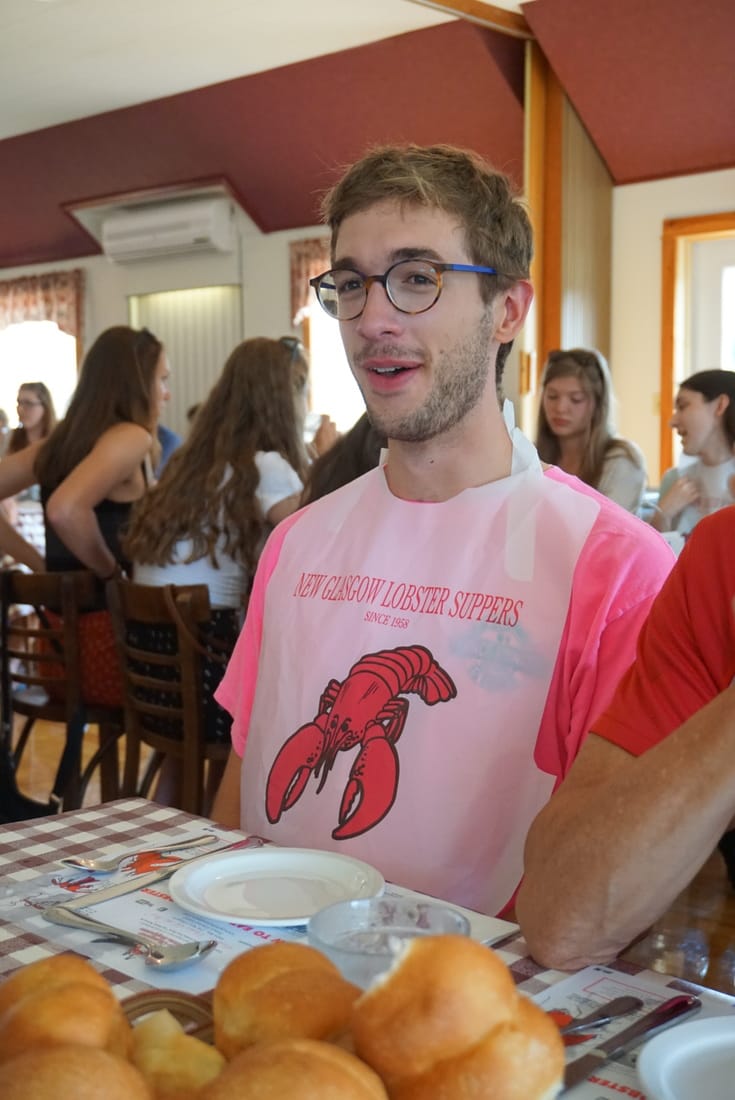
When I got home from the east-coast tour, I played what I figured were my last couple gigs, with Jeremy Fornier-Hanlon's Shadowfax and Shera Kelly. I sold my upright bass to a younger student. With that cash, plus some more I'd just received for playing a wedding of a close friend's family member, I had something to live on in Copenhagen.
I went out for dinner with my date on the night of August 3rd, talked at length about whom I wanted to be, said goodbye and got a couple hours' sleep at home, then headed out early for the airport. Although my soon-to-be-landlord wasn't sure how long she could rent to me, she promised at least the month of August. She picked me up from Copenhagen airport in a Jeep-like French car and had curly black hair. Her name was Ulla.
Ulla lived in an area called Emdrup, which feels like 29th Avenue Station's distance from downtown. Her front yard had two apple trees, and before I could enter my basement door around the side, she told me she had old bikes in the shed. She had four extra bikes. One of them would get me through most of my stay, and after it got stolen in a park, I apologized profusely and switched to a second.
Just inside my door was a makeshift kitchen of ten square feet with two little stove burners and a couple dishes. I had a relatively big living room with no TV, a small bedroom in the back, a washroom the size of a shower, and access to laundry machines in a storage room. Next to the washer and dryer was the actual shower I would use.
Ulla played piano and taught students who came for lessons upstairs, where she lived by herself. I soon learned she had regular gigs playing organ with groups of singers at Lutheran churches. She was also a cafe owner; her establishment was in a small town an hour's drive away. She had two grown children around my age.
At 20, having just lived with my mum or dad, I barely knew how to cook. I shopped at Aldi up the block in Søborg, repeatedly buying the cheapest groceries. I lost more than 20 pounds living on eggs, Polish sausage, dark rye bread, and chili. Dining out was far too expensive; at events, I'd spend as little as possible of the fixed amount of Danish kroner I withdrew from an ATM every two weeks. I ate maybe three restaurant meals on the whole trip, and one of them – at a trendy Millennial pizza place in Vesterbro – was paid for by a musician I had a crush on.
I passed as Danish to pretty much all locals, who were often excited when I replied in North American English. I usually got downtown by walking for over an hour. A famous church called Grundtvigs Kirke (look it up, it's cool) was a landmark early in the walk. To this day, when I'm trying to calm myself down before bed or when I'm stressed, I mentally perform this walk.
Lacking the trusty Alberta Premium whisky that I kept behind my bed in New West, I befriended Tuborg beer and akvavit liquor. One of my first nights in Ulla's basement, I got drunk and stayed up streaming through Lucinda Williams' discography. I took to Little Honey (of that Bellingham bookstore moment), World Without Tears, Car Wheels on a Gravel Road, Sweet Old World, and her self-titled 1988 record. Blessed had a song called "Copenhagen" where she pronounced the name wrong.
I sang along to Williams' songs and played them with the acoustic guitar in the living room. At the end of that night, I came up with a riff on C and A-minor and sang a simple melody atop it. Too bad I don't still have a copy of the lyrics I came up with. I was thinking about home: despite being a couple days in, the pull of what I was trying to leave behind was intense. All I kept from this song lyrically was its mantra at the ends of the refrain's phrases: "Aim to Stay".
The week after I arrived, I volunteered to pour beer and serve people at Copenhagen Pride. I met some people doing that who knew something about the nightlife. I biked to meetups at summer outdoor movie nights (Gone Girl?) with them. Also, my Vancouver friend Julian Jayme – who never ceased to connect people with his big personality – had put me in contact with a Danish drummer he knew from Berklee. That drummer got me to visit the legendary Jazzhus Montmartre club, and from there, I met some local students and followed them to some smaller gigs at places I can't recall. I didn't play any jazz in Copenhagen, but my outings weren't far from how I'd recommend any young musician to get their feet wet in a new city today.
Ulla liked me enough that she rented me the suite for the rest of the trip. I looked forward to bumping into her on most days and telling her about my mundane adventures, or the wildlife I saw on my jogs in the big park nearby called Utterslev Mose. I'd speak bad Danish to her and she'd respond slowly, not switching back to English until I did.
I tagged along to Ulla's church gigs and touched centuries-old pipe organs. She brought me to her small-town cafe and let me play the old upright piano, or guitar, and sing there. I sang songs by Williams, Joni Mitchell, Neil Young, Coldplay, and some of my own new songs, of which I had about a dozen. I talked with Danish friends, and Skyped with family at home, about how I wanted to record my first album as a singer-songwriter when I got back to New West. Ulla never played music with me.
Most of the songs I wrote are lost to the sands of time. Between 2015 and 2020 I had several phones, several computers, and no prescience of how much I'd later appreciate a good archive. One song I do remember called "Joyce Street" was about walking all the way home in the middle of the night from North Burnaby to New West earlier that year. I might still have a chart for it somewhere.
Upstairs at the house, Ulla had a weekly piano student around dinnertime whom I never saw but heard often. They kept playing this chord progression toward the end of each lesson that seemed to have no obvious melody part. The satisfying chords resembled a jazz standard.
I ended up writing my own melody over the chords. My arrangement of this new tune, like the one for "Aim to Stay", used a pop music trick that I call the truck driver's modulation: extending the track with a key change, usually up a whole step, like a gear shift. ("Aim to Stay" had two of these key changes, and the final one has something special that's too nerdy to describe here.) I never used the truck driver's modulation any other time. I don't know what that says about my Copenhagen writing style, other than maybe it was more pop-influenced per my singer-songwriter fantasy. Anyway, I named this tune "Ulla".
It was late October, and I had seven or eight days to go. I was out of cash despite my radically budgeted groceries (and the apple trees' bounty). Ulla stopped me on my way out in the morning and asked if I had big plans for my last weekend. I didn't; I hadn't made lasting friends, no going-away party, no sendoff. She invited me to come along on a drive into Sweden, where she owned a rural property that she said she'd check up on before the real winter set in.
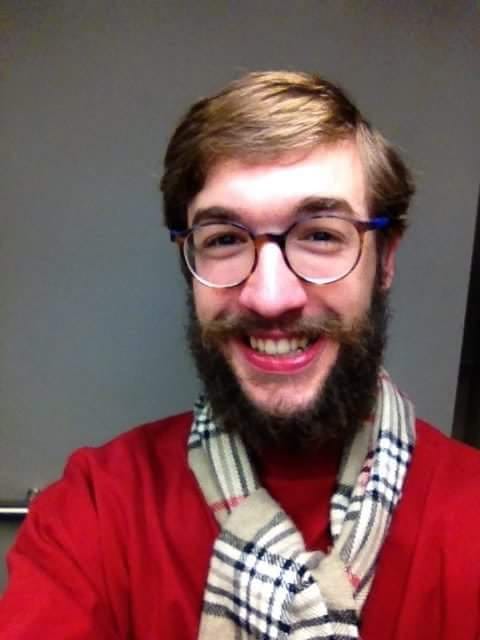
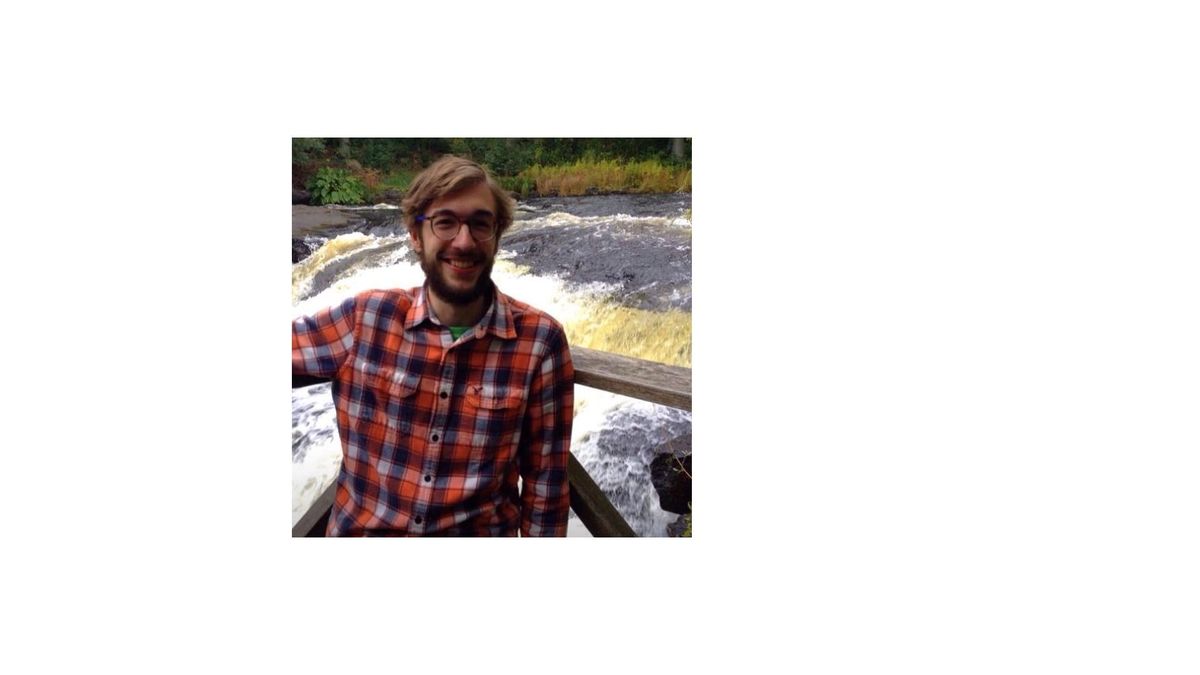
The next day, I met Ulla out front and rode shotgun with her across the Øresund Bridge to Sweden, and onward for several more hours. She liked listening to classic rock in the car. I never determined the location of her Swedish house, but we stopped in a place called Mörrum, where she took the photo of me at the top of this piece. She cooked us dinner after we arrived at her property: in the morning I made toast and eggs, eight eggs for the two of us in a single cast-iron. I stoked a fire and read books that I'd bought.
Across the meals and a long snowy walk somewhere, I spilled to her about the people back home whom I missed, loved, resented, admired, avoided. With such a selfish focus, I retained no memory of the tea she spilled to me in return. I napped or sat in silence the whole drive back, thinking about my songs.
Ulla dropped me off at the airport ten years ago tomorrow, November 1st. Little did I know, my only solo travel experience as a single young man had ended: I met Vez a few months later in the spring, around when I reconvened my quartet (with Carson Tworow on drums, as Bobby had moved away) and booked another studio date. That second session, combined with the pre-Copenhagen one, would complete my debut album.
I'm sure you noticed the trip wasn't about urban planning at all. The intent was to run away from both my fears and my dreams, and as I now know from being a 30-year-old still playing the same infinite game, I failed at doing that. Thank goodness I failed at it. At my next show in November, we're playing a Lucinda Williams song; "Ulla" and the whole rest of my album is on tap at Frankie's two weeks later. Wow, I'm still here with you! That's the meaning of that title, Aim to Stay.