Dipping my toes in the jazzfest tour ocean
"they're talking to each other"

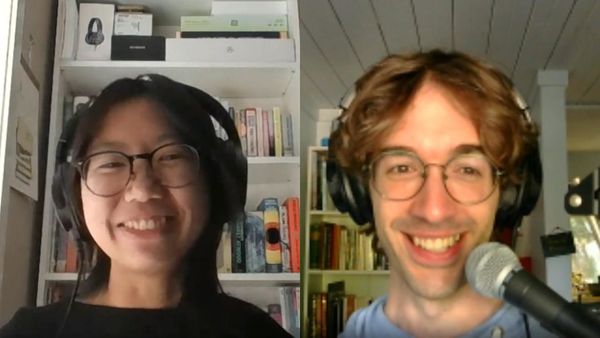
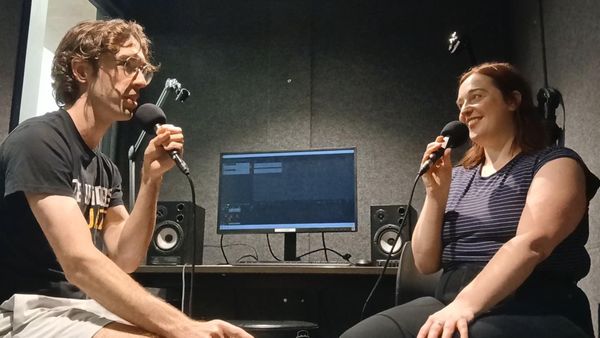
I want to go deeper on a segment from my recent interview with Mary Ancheta and Matt Reid of MA: Q:
 Will Chernoff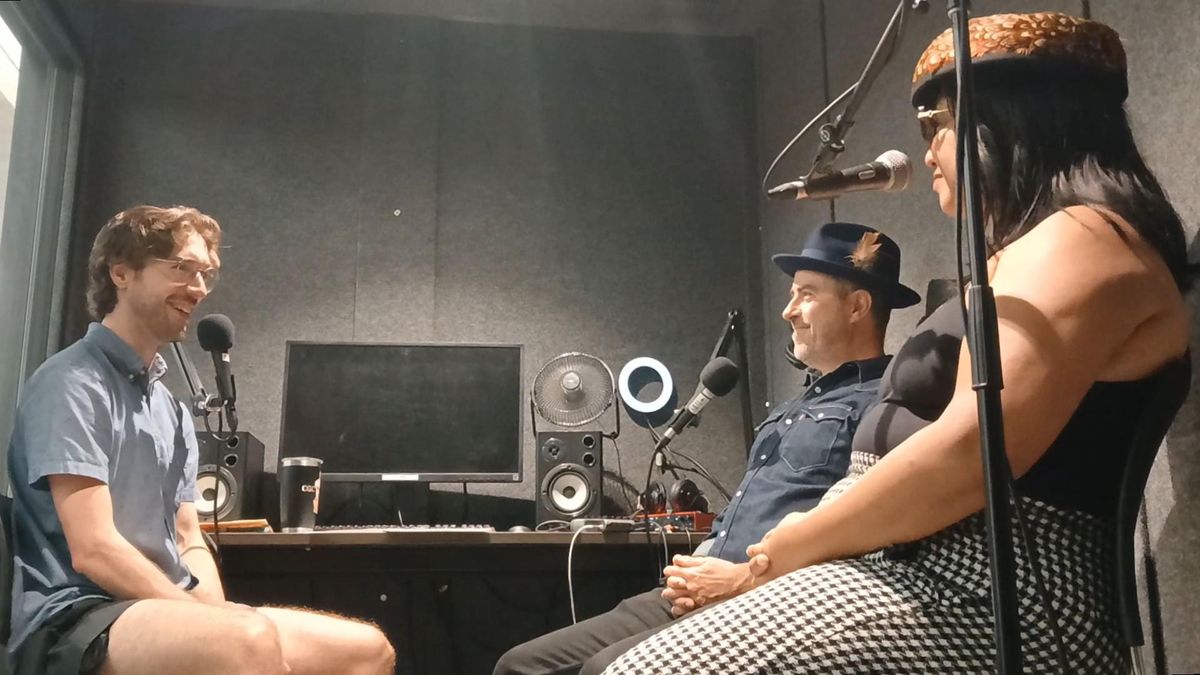
We talked about many things related to their success as a band. But at time 16:30 of the video, I got the chance to ask Mary about arguably the biggest undertaking a Canadian artist in this music can try, one with an application process that makes you feel like a small drop in the late June ocean. I'm talking about touring multiple Canadian jazz festivals with the support of the Canada Council's Circulation and Touring grant.
Mary and Matt have done it two times. This year, MA: Q played the Medicine Hat, Edmonton, Winnipeg, Toronto, Ottawa, Montreal, and Vancouver jazz festivals (plus Calgary's Sled Island and other stops on the tour). And back in 2023, they played the Winnipeg, Toronto, Ottawa, Vancouver, Victoria, Edmonton, Montreal, Saskatoon, and Halifax festivals. Each one of these alone is a rare achievement for a domestic act in the national scene.
Here's the cleaned-up transcript of just under five minutes of us talking about it. I'm going to bold myself per my usual formatting, and then I'll underline some of the most interesting parts.
WILL CHERNOFF: I have never done this. Most of my friends haven't done this, [there's] maybe a couple who have: the experience of doing the Canadian jazz festival summer run, where you go and you play a whole bunch of them. There's a lot I don't know about how that gets put together. Like, if you want to do it, when [do] you have to start preparing for it? How far in advance, and in broad strokes what the steps are that you have to take to coordinate that. Because it certainly doesn't happen my accident.
MARY ANCHETA: No.
WC: I'm sure there's a lot of different layers to it, but is there anything you can share about how you put that together and what the steps are? Specifically the Canadian jazz festival run that I think you did three years ago.
MA: Sure.
WC: Maybe you've done it multiple times too, but how does that come together? What do you have to do?
MA: Yeah. We've just done that twice. So many things have to align, and I certainly feel lucky and grateful that those things have aligned.
It's a matter of thinking ahead early. People often want to know that you have a product: do you have a new album? I think they're going to favour oftentimes if you have a new album or new music to present. Presenters want to hear that. The potential of having a product out before all that, or knowing that you're going to have something ready [...]
And then at a certain point, because of Canada and how far away everything is, you need to have the potential [...] to get a letter of support that the festival is interested, they have interest to book you basically, and these letters could go towards applying for a grant. And honestly, a lot of things are reliant on getting that grant.
WC: Yeah.
MA: If you're not able to get the grant, are you able to fund it yourself? That's a question only you can [answer] [laughs]. But it's certainly difficult in all the things that have to align.
WC: Yeah. As a local artist, I can wait until December to apply to my local jazz festival. But it sounds like maybe the first step is to try and get some letters of support from individual festival ADs [artistic directors]?
MA: Yeah, potential, yeah. ADs, yeah.
WC: Like if you did this in the '23 jazzfest season, are you reaching out to these people in the summer of 2022, or how early does that have to happen?
MA: Well, yeah, because people are finishing the festival that just finished, and then they probably don't want to talk to you at all because they're taking a break. But after that festival season, probably in the fall or something, they're talking to each other. They're going, who's gonna be touring this year, right? Because they also have to know, it has to be potentially that circuit. If one person was getting a grant, then they kind of run that circuit.
MATT REID: And also working backwards from, like Mary says, your album. If you have plans to go to the studio, when's that album gonna be finished? Will you have enough time ahead of these applications to share that with people that are looking at the different bands? So it's sort of like, it goes back quite a bit.
MA: Yeah, it's just so many [...]
MR: Yeah, at least a couple years out.
MA: Trying to just put together all the dots. Do I have a video, or something that's representative? If I don't have the album that's [coming out] yet, do I have a live video that's representative of what we do, that presenters might get excited about?
WC: And it sounds like also, one of the keys here is you have to have relationships already, at the time you decide you wanna do this, with enough of the festival ADs. Because you are reaching out to them, and you're seeding this plan, it sounds like, by telling them that you have all this stuff prepared and that you have this plan. You wanna do this, and you're looking for the letter of support so you can keep building on that. Is that how it comes together?
MA: Yeah [...] I didn't have any relationships [for the 2023 project]. It's something that I just started to build. It was me going, okay, who books, you know?
WC: You just had to reach out.
MA: Yeah, maybe you're going, okay, here's our local festival. Who are [...] They're always changing. Some of them stay put for a lot of years, and then they turn over. I think it's a matter of knowing who they are and the potential of building that relationship, or being able to make them at least aware of who you are and what you do.
I look forward to corroborating these thoughts with a couple other bands I know who've done the big tour. In the coming years, I hope to see more people in our circle get this opportunity.