The tragedy of music industry advice books
It's all In-The-Office-Mix & no YouTube; learnings from the 2006 book Get Media Airplay

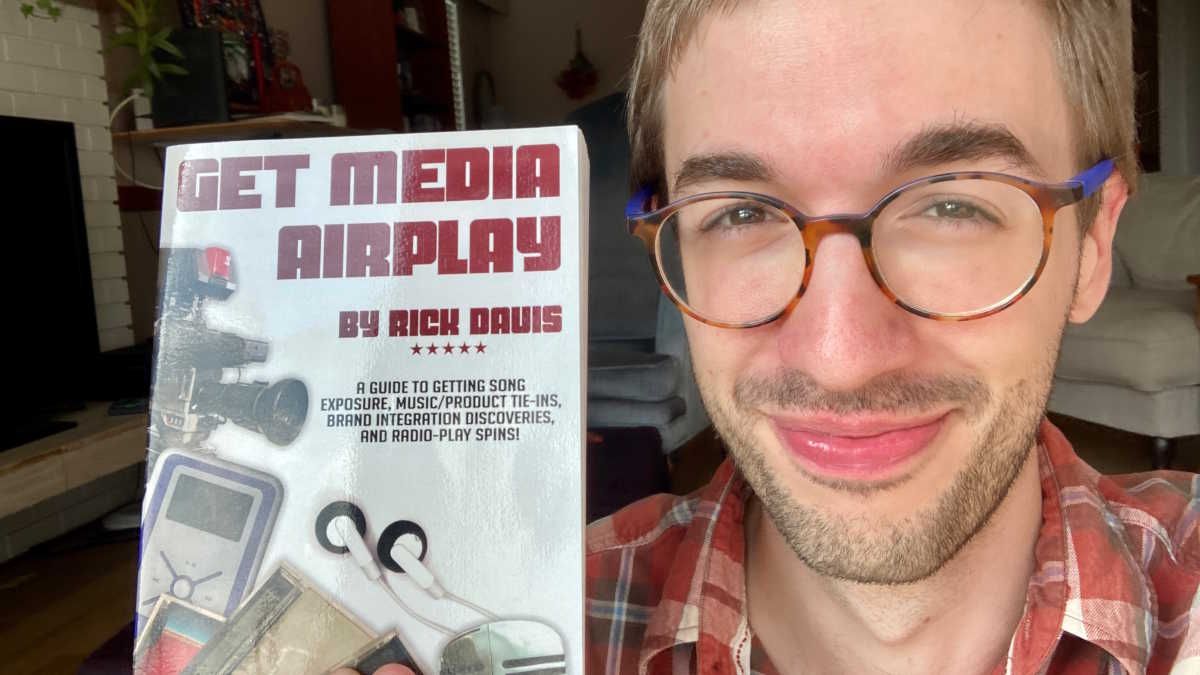
I found a music industry advice book from 2006: Get Media Airplay by Rick Davis, published by Hal Leonard.
Unfortunately, reading this book led me to a tragic flaw – the tragedy of all music industry advice books.
In this Update I'll show you what that tragedy is. But first, let's set the scene...
Imagine being a DIY musician in 2006
Maybe you don't have to imagine – maybe you were one. This book assumes you have the fundamentals in place; it's not for people who have never tried the industry before.
You have confidence, but you need more, because you're trying to play the game of music business. You're looking for the route to opportunity in the industry.
Radio is king. You can't get played on the radio without first getting your product into physical stores. After that, getting in front of people is the struggle: working the phones and the streets to get your name out.
But you have a sense that in the early days of Web 2.0, this game can be learned and practiced. If you had someone in your corner rooting for you and showing you tactics to get in front of people, you could play the system and win a bit for yourself.
Enter Get Media Airplay
Rick Davis' book title is not just an exhortation, it's spiritual: "'Get Media Airplay' is my term for making progress daily on the inside (believing in yourself) and outside (conducting business) beyond the radio world."
The author promises that, based on his tactics, you can secure some key placements in stores and on the radio. Once you introduce yourself confidently and properly to those people, you're on your way and can build from there.
But back to our armchairs in 2022, I can confirm your first impression about the book: that the details must be hopelessly out-of-date. Did anyone's most recent album budget look like this?
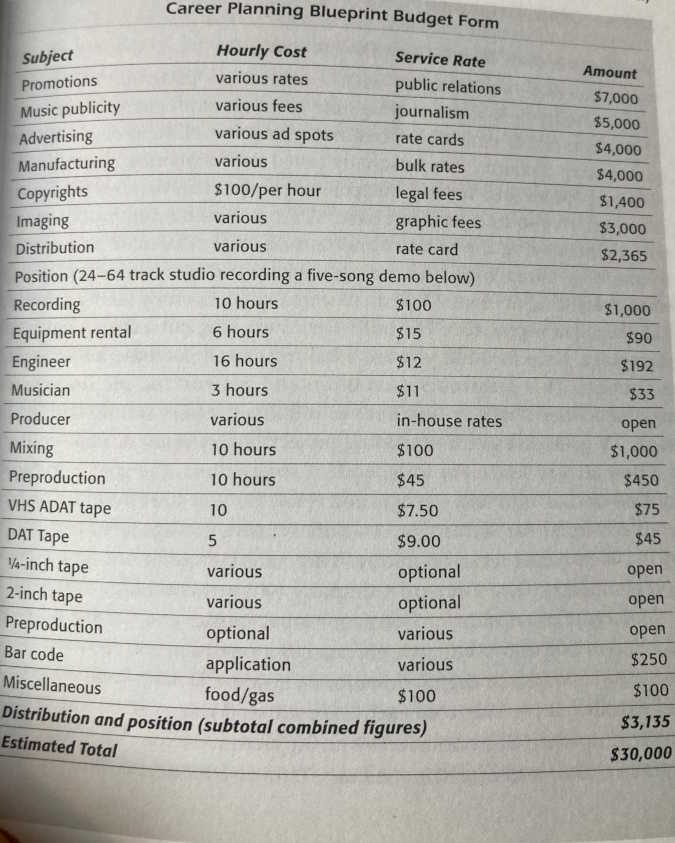
How much did you spend on DAT tape this year?
I admit, the time-capsule nature of the book is fun. "DJ" is probably the most common word, surely appearing over 200 times in the 150-ish total pages. Almost every page has a bunch of URLs, phone numbers, physical addresses, and contact names.
Some of the words you won't find in the book at all: Spotify, iPhone, Android, YouTube (we'll get back to YouTube in a bit here).
That said, of course it's too much to ask for the whole book to stand up after a decade-and-a-half.
What a music industry advice book needs to do
I'd say this kind of book only needs to offer accurate routes to opportunity in its own time. This passage (pp. 91-92) is a great example of advice that was spot-on in 2007:
“When we break a new artist on our morning show, there has to be a reason! Why is the song getting airplay? Did our listeners request this particular song? [...] What local clubs have heard about this band? I need an excuse [...] We must spin the tunes that are on the charts and what the listeners want to hear.”
Much of the book's prose is Q&A, featuring answers like that one from various industry people. And a lot of the tactics centre around what the author calls In-The-Office-Mix (ITOM).
ITOM refers to getting yourself into physical offices and hitting targeted personnel with your pitch and product. Phone lines always tied up at the radio station? Show up and introduce yourself to the music director, armed with a stylish demo package! Looking to meet industry contacts? Crash parties and conferences (seriously) and parlay a few key verbal introductions into real credentials. Play the system to win the system.
That's hustle, this stuff is still alive today as the grindset, and it's the spirit of Get Media Airplay. It's admirable, but...
I think – especially with hindsight – we could write five words that would outperform all the advice in this book:
Start doing YouTube. Don't stop.
Remember I said we'd get back to YouTube? Not only did YouTube already exist in 2006, but Google had already bought it, and I (a literal child) was already using it to watch videos.
If I touched down in January 2007, the best way for me to get "airplay" would not be to play the current game better, but instead to do an end run around the game and try something like YouTube or Twitter, or in a couple years Facebook, SoundCloud, Bandcamp, and yes, even Spotify.
This is the truth about how there are no gatekeepers. More and more, the inside baseball of the industry is for people making excuses about not spending enough time going direct-to-fan online. The people are out there; getting into stores is no longer the bottleneck. I'd rather meet a hundred fans instead of one VIP.
A book worth buying in 2007 would have had something to say about this; Get Media Airplay didn't.
The tragic flaw
Music industry advice books are categorically just not the thing that would lead you to 2007 YouTube and the wave of opportunity within. A book doesn't get published if it bets on a future strategy; it has to tell the story of what works today. And that means all these books give bad advice, the kind that won't last through the next wave.
So what do we do: how do we find that 2007 YouTube wave today? I don't know the answer – but hey, I was using YouTube in 2007. I wasn't old enough to really make anything, but it was earning my attention as a consumer.
What's a relatively new thing that you enjoy as a consumer, but don't have the time to learn how to use as a producer?
Time to go have fun with that thing. Hire someone to sort out something that makes sense for you, if you must.
Ironically, for me the answer is still YouTube. I'm thinking about my video strategy as an artist – maybe I'll write more on that soon.
Maybe yours is TikTok, video on Instagram, podcasts, Substack, or some crypto thing I've never heard of. I know I won't find it in a book.
 Rick Davis