Russell Wallace on his new Saltchuck City Orchestra album
The indigenous artist releases klatwa, produced by John Korsrud, on Feb. 7 with the band playing at VCC the same night

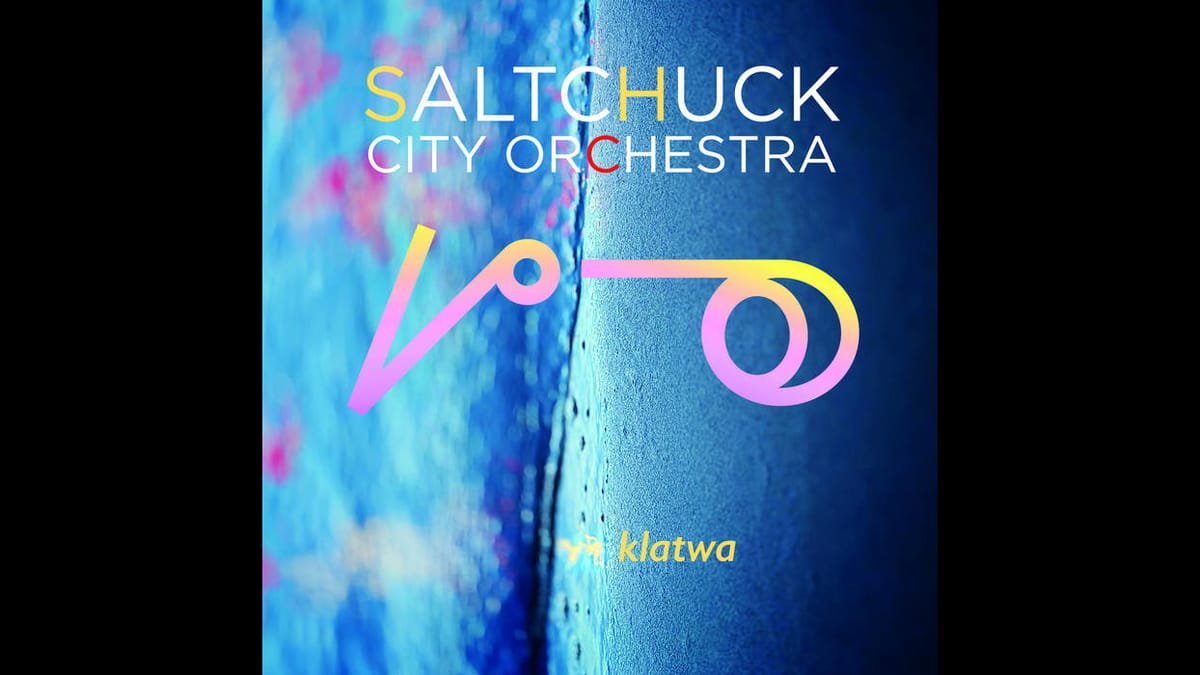
Russell Wallace is a singer and composer from the St'at'imc and Lil'wat nations. He convened the Saltchuck City Orchestra to record a new album, klatwa, that continues his long history of meeting points with Vancouver's new music and creative music scenes.
Wallace and the Saltchuck City Orchestra play a release show co-presented by VIM House tomorrow, February 7th, at Vancouver Community College's Broadway campus. Tomorrow is also the release date for klatwa on the local label Redshift Music.
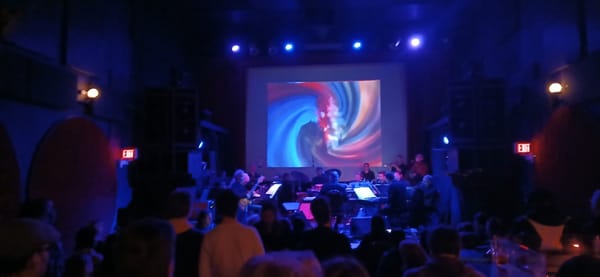
The orchestra previously played a concert on March 4, 2023 at the same VCC auditorium. Videography on YouTube of a couple songs, including "River of Crows", shows Wallace in a vocal quartet backed by a hybrid jazz-string ensemble.
In a phone interview with me just yesterday, Wallace told me about growing up near 18th and Main. "I don't know if you live in East Van," he said, "but usually near sunset, the crows move towards Burnaby to roost. In the sky, it looks like a river of crows moving east to find their resting spots. They embark each night to do that and other things."
Wallace translated the word klatwa as "to lead, to go, or to embark". He identified "River of Crows" and the subsequent song on the album, "Zumak (Spring Salmon)", as ones that he used to sing in the group called Tzo'Kam. Featuring his mother Flora Wallace and other family members, Tzo'Kam performed St'at'imc music on the folk and arts festival circuit going back to the late 1990s.
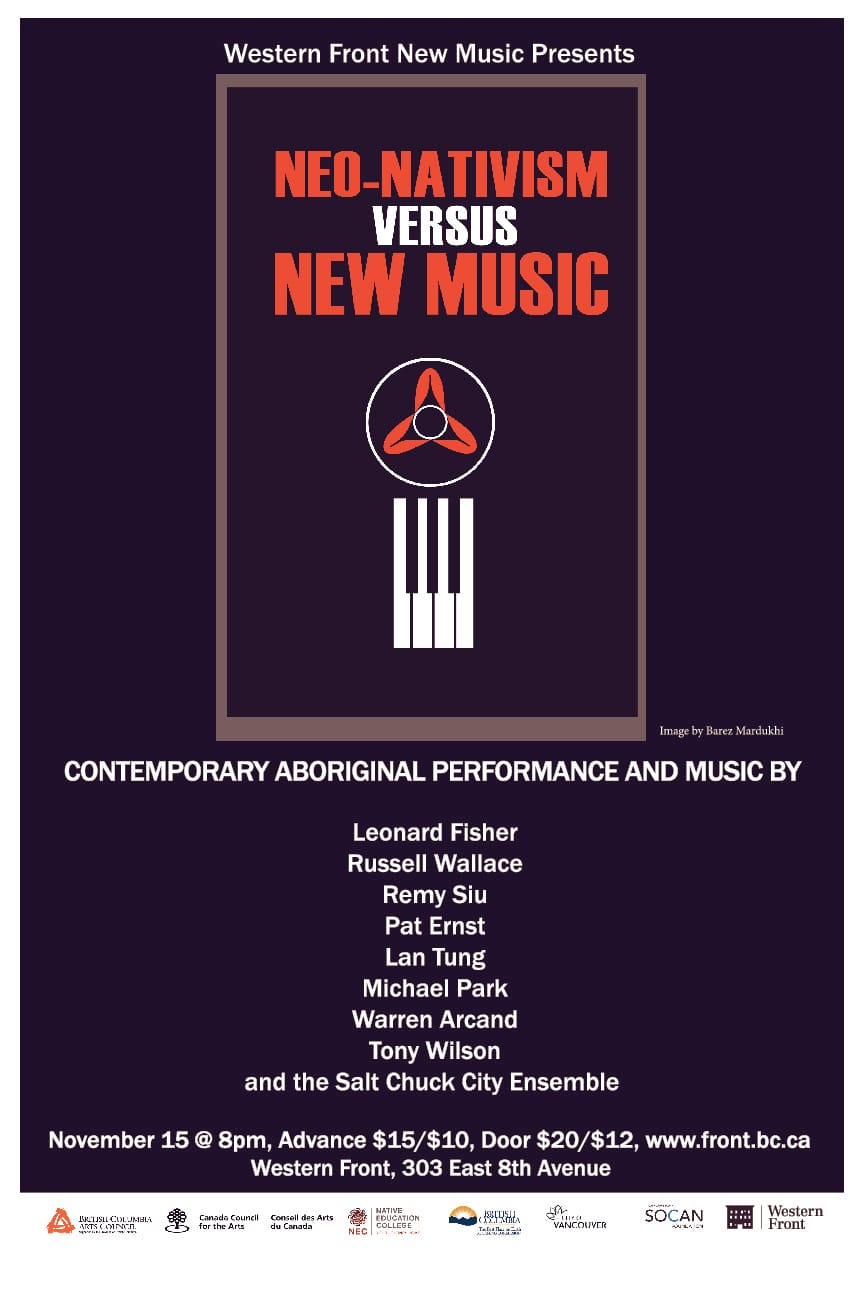
In discussing the origins of his current project, Wallace pointed back to an event on October 21, 1989 at the Western Front. It was billed as "a multimedia performance by Neo-Nativists—the collaboration of emerging Indigenous artists Warren Arcand, Leonard Fisher, and Russell Wallace".
"At the concert in 1989," Wallace said, "I had a turntable with me in the gallery. It was a little controversial at the time, because people thought, oh, well, it's a turntable. Why are you bringing this into a gallery? What does that have to do with art? A lot of questions came up. But now, turntables are a big part of a lot of exhibits and different things, and music and art kind of go together."
The 2023 concert at VCC was "the 33-and-a-third anniversary" of the 1989 show, Wallace noted with turntable humour. Warren Arcand then passed away last year and received a celebration of life at the Western Front this past November.
Their original ensemble name appeared again between the decades, at the same venue: 2014's Neo-Nativism Versus New Music. Alex Varty, writing for the Georgia Straight ahead of that show, called the original group "a landmark fusion of aboriginal music, video, and performance art." Wallace talked to Varty then about his ambivalence around the brand name, which he still felt when talking with me this week.
"So Saltchuck is basically a Chinook jargon word which means ocean," Wallace said, starting to tell me about his current ensemble's name. "So chuck means water and, well, Saltchuck, so salt water. Chinook jargon was used primarily here in BC, and up and down the coast, as a trade language between nations and between early trappers, English and French trappers who came out this way."
"Saltchuck City is also a reference to a book by Paul Yee released back in the 80s, talking about the Chinese coming to Canada and identifying Vancouver as... they called it Saltwater City. So it's kind of two reference points for that." That book is Saltwater City: An Illustrated History of the Chinese in Vancouver.
Wallace also juxtaposes those "two reference points" of Asian and Salish cultures in the music itself. Lan Tung, who plays erhu, is a local musician whom Wallace said he wouldn't do this project without. Her presence on the haunting opening track is one of the album's several erhu highlights.
"Hearing these traditional Chinese instruments, to me, is a big part of Vancouver history," he said. "That's why I wanted Lan Tung to be part of this, because she's an amazing player."
The track "Indian Arm" features a vocalist who also sang on Wallace's previous album, Retro Salish Futurisms: Shruti Ramani. Ramani grew up in India; having her sing a pre-existing song titled in reference to local waters was intentionally "a bit of tongue-in-cheek", Wallace said. Curtis Andrews joins Ramani's Hindustani-based vocals with his mridangam percussion instrument as the arrangement unfolds.
The making of klatwa was the first time that John Korsrud produced a record for another artist. (I picked up my advance CD copy at his recent Absolute Unit show.) Korsrud had collaborated with Wallace a couple times before. Roughly speaking, he chose the instrumentalists – apart from Tung, who was always in – while Wallace chose the three singers joining him in the vocal quartet. (A fun detail in the liner notes: Wallace gets a credit on "bass" just as Wynston Minckler does, but for the leader, it refers to his vocal range.)
"He gave me the green light to be as creative as I wanted," Korsrud said. "All of the rich harmonies are his; my role was largely to orchestrate the material he gave me, write background parts, and find moments where the soloists could really shine."
Harmony had been in focus for Wallace's own musicianship. "In the last few years, I got more proficient at chords," Wallace said. "I don't have any western music training, but I've played guitar, I've done a lot of midi work since the 80s, so I kind of know how to program different things and write on that, just experimenting with chords."
"I worked a lot with the jazz community in Vancouver in the last ten years or so. It's really opened up my mind in terms of, I can put this really funky chord under this one note of this song, and it'll sound pretty cool."
He summed up the harmonic results on record with a hilarious line: "Columbus-ing some chords like I never knew existed before."
The sessions took place over almost a full week at Hipposonic Studios, engineered by Sheldon Zaharko. Each section within the ensemble came in separately.
David Sikula is the guitarist; his parts range from his rocking solo in "Gathering Song" to acoustic guitar on "Indian Arm" right off the top. "Russell’s music is like nothing I have ever heard", Sikula said. "He’s drawing from traditional melodies and material and seems to be seamlessly blending these with modern harmonic concepts, in a soulful way, across a broad stylistic palette."
Marina Hasselberg's cello is another highlight, most noticeable on tracks like "Star People" and as the drone on "Indian Arm" with Andrews and Ramani. "I find Russell’s presence and music very much inspiring and grounding," Hasselberg said.
Other soloists across the record include saxophonist John Nicholson and pianist Noah Franche-Nolan, who both play in Korsrud's Absolute Unit; and Bill Runge, who on alto saxophone brings the studio-pro class you can always depend on from him and his generation of local players. Raphael Geronimo's percussion enhances several tracks' palettes.
Listening to this new album and then going back to any of Wallace's latest few records – Retro Salish Futurisms, then 2023's End of Summer and 2021's Unceded Tongues – provides a striking contrast: he has arrived somewhere new. Those previous albums have much more lyrical content, including via indigenous languages, and they're much more beat-driven.
"All those other previous ones, Wallace said, "I funded on my own. Some of them took four or five years to complete, because I invested my own money and paid musicians out of my own pocket, and studio time, and I couldn't get large chunks of time in the studios: one day off here, one day here, and whoever was available, basically. But with this one, yeah, all the musicians were there for a majority of all the tracks."
Having fewer songs with lyrics was an emergent quality of klatwa, not necessarily a goal. "I did go to school, UBC, for creative writing years ago, so writing is important to me," Wallace said. "But for this project, it was more about the voice being like an instrument, I guess, like everything else in the orchestra."
In recent years, in addition to scoring for film and stage, Russell has also collaborated with organizations like musica intima, Coastal Jazz (as an artist in residence for the 2019 festival) and the Heart of the City Festival. Reflecting on the opportunity to lead a much bigger project, Wallace stayed grounded in his ongoing artistic practice. "I appreciate working with John Korsrud and all the musicians. It was such an amazing experience, and every time I work with other people, I learn something. That's part of my training: working with somebody new, I get to learn something, and that's how I progress as an artist."