10 years after CapU jazz, here are 10 things I've learned
I enrolled back in September 2012

I've been thinking about (and enjoying with friends) how this September marked ten years since I enrolled at Capilano University's jazz program for a year, back in September 2012.
In a follow-up to this early piece, let's explore ten things I've learned – though perhaps I've learned wrongly! – since then.
1)
Attending CapU jazz won't often lead to working in the music business' private sector, with one exception; teaching lessons at music lesson studios.
2)
Going there did help me work in the public arts sector, as I got my first job in music from a posting on the bulletin board in the Fir building, days before dropping out. And of course, many people find work as teachers/instructors/faculty/etc. after graduating from Cap and from UBC's Dual Degree Program. That's the main track.
3)
Nobody knows or cares that I dropped out unless we've already been friends. I've had conversations at gigs this year where suddenly someone asks me, "What year did you graduate?" (Or once, to my great enjoyment, "What year are you?")
4)
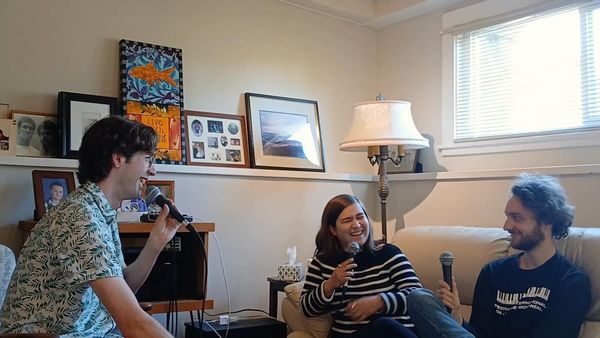
Enrolling at age 17 was bad for me; waiting probably two years would have drastically improved my experience in the program. I was too young. David Blake and I discuss this on our podcast episode, at around 38 minutes in.
5)
I played less as a CapU student than I've done at any other point in my career. Less time on the instrument, more time commuting from New West to North Van and doing dumb teenager stuff. This probably would've changed if I stayed to graduate, but it's striking when looking back. Isn't that supposed to be the time where you play the most? Even in high school I had spent more time practicing and playing.
6)
I have this conceit that I didn't need to go at all. Here are peers whom I had already met and played with, pre-CapU: Meghan Gilhespy, Madeleine Elkins, Miles Wong, Thad Bailey-Mai, Jonny Tobin, Will Clements, Julian Jayme (if you meet Julian, you meet everybody!), Jenny Xu, the Skepasts brothers... lots.
On the other hand, my best friends made on campus would be Parker Woods, Chris Fraser, Carson Tworow, and... then everyone after that, we met after I dropped-out.
So did I really need to go for the networking? My heart says no, I had my foot in the door already. Maybe that's vain but I do feel it.
7)
My peers and I enrolled into a generational dip. And we didn't know it; we just thought that barren was the natural state.
I had no idea that we were at the bottom of the recorded music industry's great depression (~2001-2015), that so few venues stayed open through the early 2010s and at one point we had no Cory Weeds club and no Tangent yet. Yikes! I tell every younger fan I can that there's more happening on the scene today than I've witnessed before.
8)
The Chad model. By my recollection, there were seven bass players in my freshman class; and only one of us, Chad, graduated in a contiguous period of time. The rest of us dropped out and/or returned later to graduate.
Chad had probably never played jazz before enrolling out of a North Van high school.
The Chad model is what CapU really excels at; taking someone who's willing to put in the work as a student of their instrument, from any and all backgrounds whether close to jazz or not, and bringing them into this world.
9)
There's no way it makes financial sense to go. I can only recommend it to people who really want to teach music in school as their main career outcome. Fortunately I had scholarships on my way into CapU, but I'm deeply skeptical that the tuition wouldn't have been better spent on a mix of things: private lessons, going to gigs, making some records/videos...
Some of my friends joked (probably) for a while that I had left because I "was too good for" CapU. This hurt me to hear. It didn't fit my experience at all; in fact I left feeling ashamed of how poorly I had fit with the culture and the program.
It took ten years of real-world career, from working up through a tiny nonprofit to launching a band to writing and podcasting to getting a record label job, to move on and realize that I had broken up with CapU like many people break up; we drifted apart as we grew to understand how different our goals truly were.
10)
I have no regrets. I still think about CapU fondly all the time.