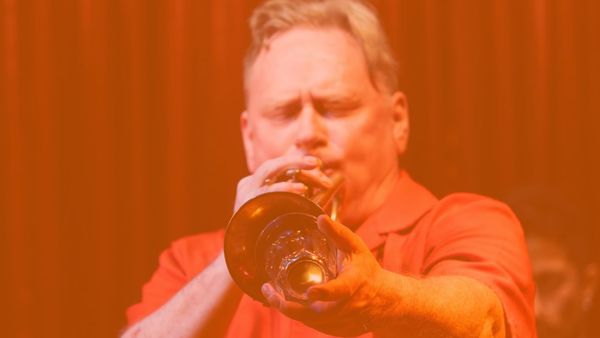
Brandon Woody at the Fox Cabaret
The Baltimore trumpeter's band Upendo with Troy Long, Mike Saunders, and Quincy Phillips

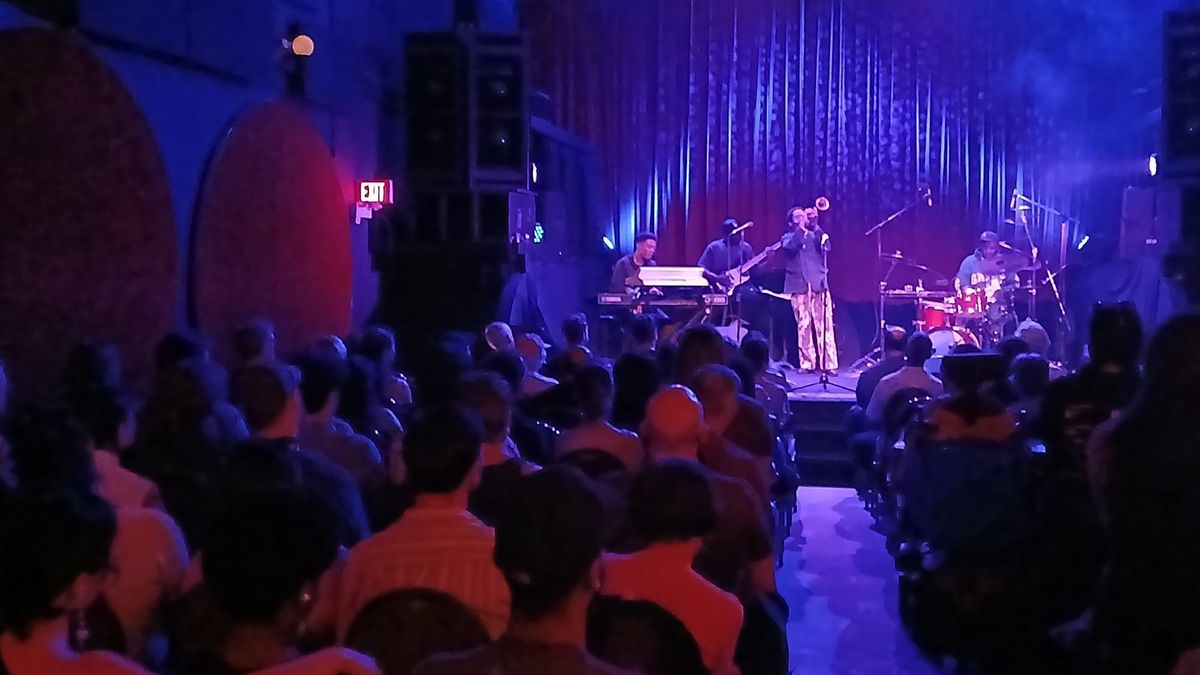
On Wednesday night, trumpeter Brandon Woody played the 2026 Vancouver International Jazz Festival's first headline show. He led his band Upendo, with pianist Troy Long, electric bassist Mike Saunders, and drummer Quincy Phillips, through two sold-out showtimes at the Fox Cabaret.
Upendo is an ensconced band of four friends who share in Woody's Baltimore heritage. Woody began playing with Long in their early teens (which you know I love); on Wednesday night, he let the pianist count off most tunes. They met the other two musicians while continuing to choose home. The four have a deep book of originals, playing only one (maybe two, if memory failed me) of the six tracks from Woody's 2025 Blue Note debut, For The Love Of It All.
For instance, they played "We're Not Scared", which isn't on the album.
I saw Woody, 27, get out of a car and stroll into the Fox less than ten minutes before I gained admission to his early show through my festival pass. His fashion acumen marked him clearly as the bandleader. He has earned tons of press, from features in the New York Times and the Washington Post to the (much, much more established) Rhythm Changes of the DC metro area, CapitalBop. Yet he cut a humble figure: his music was dynamic, and he moved around a bit, but he was far from an out-and-out "entertainer" and spoke only once between pieces. It worked.
The band followed Woody's sensitivity. A good portion of the music was soft, and the audience gave such hushed attention that I could hear a pin drop (I did hear someone's fortunately soft ringtone go off four feet away from me). At the peaks of the set, like the built-up solo section grooves and the trumpet-drums duo that Woody and Phillips played before their fifth number, they got strong cheers.
Woody and Upendo didn't play a single swing beat. Their grooves were in constant progress, flowing with sixteenth notes that everyone jumped into and out of. Phillips was exuberant on the kit and was vocal in reaction to the musical peaks. He often found striking pairs of percussion elements to lay underneath a key solo: just kick and ride in the second piece, just hihat and time on the crash cymbal in another.
Two instrumental choices, one of the moment and one ongoing, defined the other two band member chairs. First, Long played a keyboard with a piano sound, having no acoustic piano at the Fox. Straight from the "Maiden Voyage"-like opening piece, he hid from nothing and elucidated the harmony with brilliant, straightforward moves. His solos, during which Woody often walked down the stairs at the back of the stage and into the Fox green room, could've carried an early Robert Glasper-style piano trio set.
Then, it's worth noting Upendo isn't an acoustic quartet: Saunders plays electric bass. I saw him play with a Thundercat-like thumb and fingers technique, not the textbook two-finger pluck. At the show, the muted sound led to him sitting low in the mix. The bass' modern R&B flair affirmed the group's position in a big tent of Black music, expanding a sound that otherwise would've ruffled no feathers at Frankie's.
Wrapping just over an hour of music, the band closed with "We, Ota Benga" from For The Love Of It All.
On the trumpet, Woody's various techniques and details enhanced the range of energy. He strafed off-mic, leaked out high notes with ease, and at times got as close to the mic as possible to play softly and produce a sort of "no-mute Harmon mute" tone. He liked to cue a series of chords at the ends of tunes, as if he needed more time to breathe after a hard journey: just one more celebration, one more look.