A complete guide to my FACTOR Artist Development grants
Here's my guide to both grants I wrote and received, now that they're fully complete

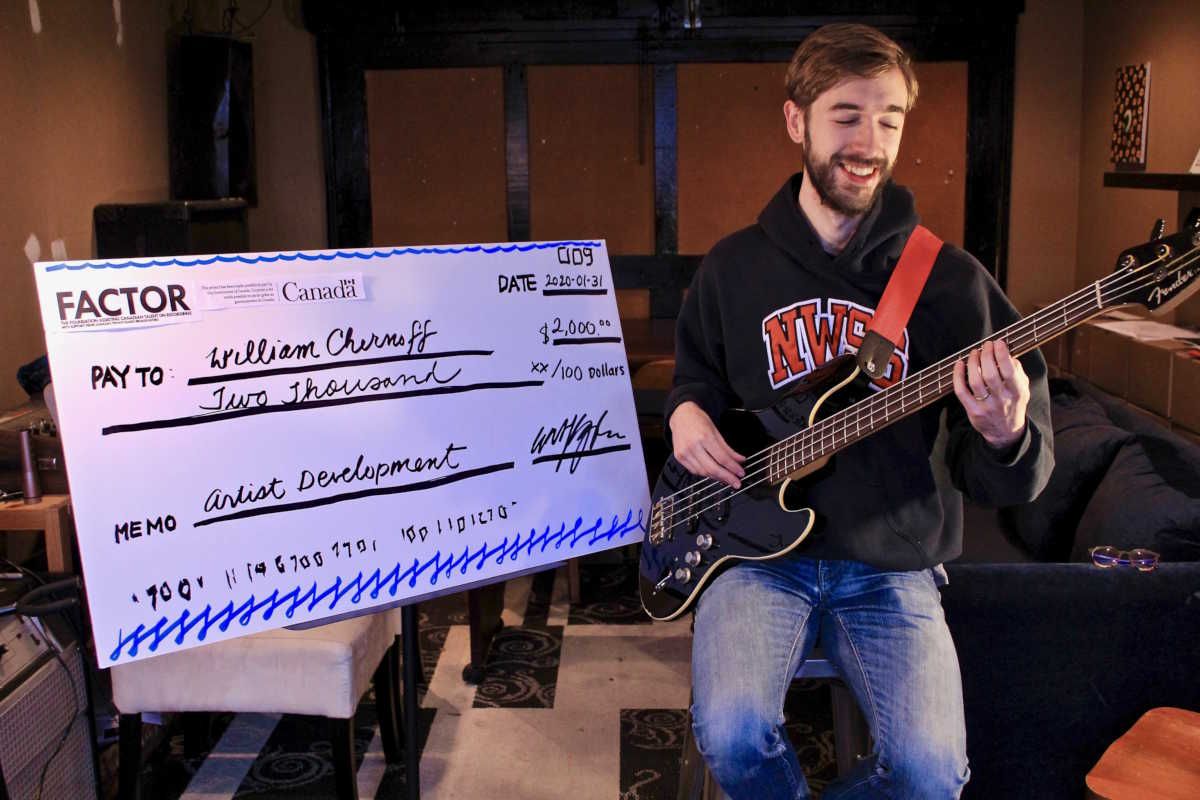
FACTOR's Artist Development program is the funding organization's most popular, smallest (in dollar terms of the award), and most selective (in percentage of applicants who are successful) program. I happen to have won this small grant twice, out of two tries: $2,000 funding each time (the program now offers $5,000 and doesn't allow repeat awards). Eligibility has a few conditions, like having released some music but only within the last couple years, no further in the past.
The first time got me to make the 12th Street Quintet EP and "In Shadows"; the subsequent time funded the completion of my second album, Maybe Eventually.
To try and aid anyone who might be applying to this grant now or in future, I'm publishing my entire applications for both grants.
Each application contains: the original photos and bio I submitted at the time, the written responses to the grant questions, the budget, the music, and any other attachments I had to include, i.e., it includes my copies of everything that someone would need to do to apply for the grant.
Back when I applied for the first time, I was in my early twenties, not even the idea of Rhythm Changes existed, I had released only two tracks so far in my solo career, and I didn't have much of a professional network yet. Even on the second time, I was applying during the pandemic and was broke, with little to no track record still.
May it satisfy your curiosity, or give you something to tell an artist-friend in need about someday. Let me know if you check any of it out!
-Will
Part 1
First application filed on October 17, 2019
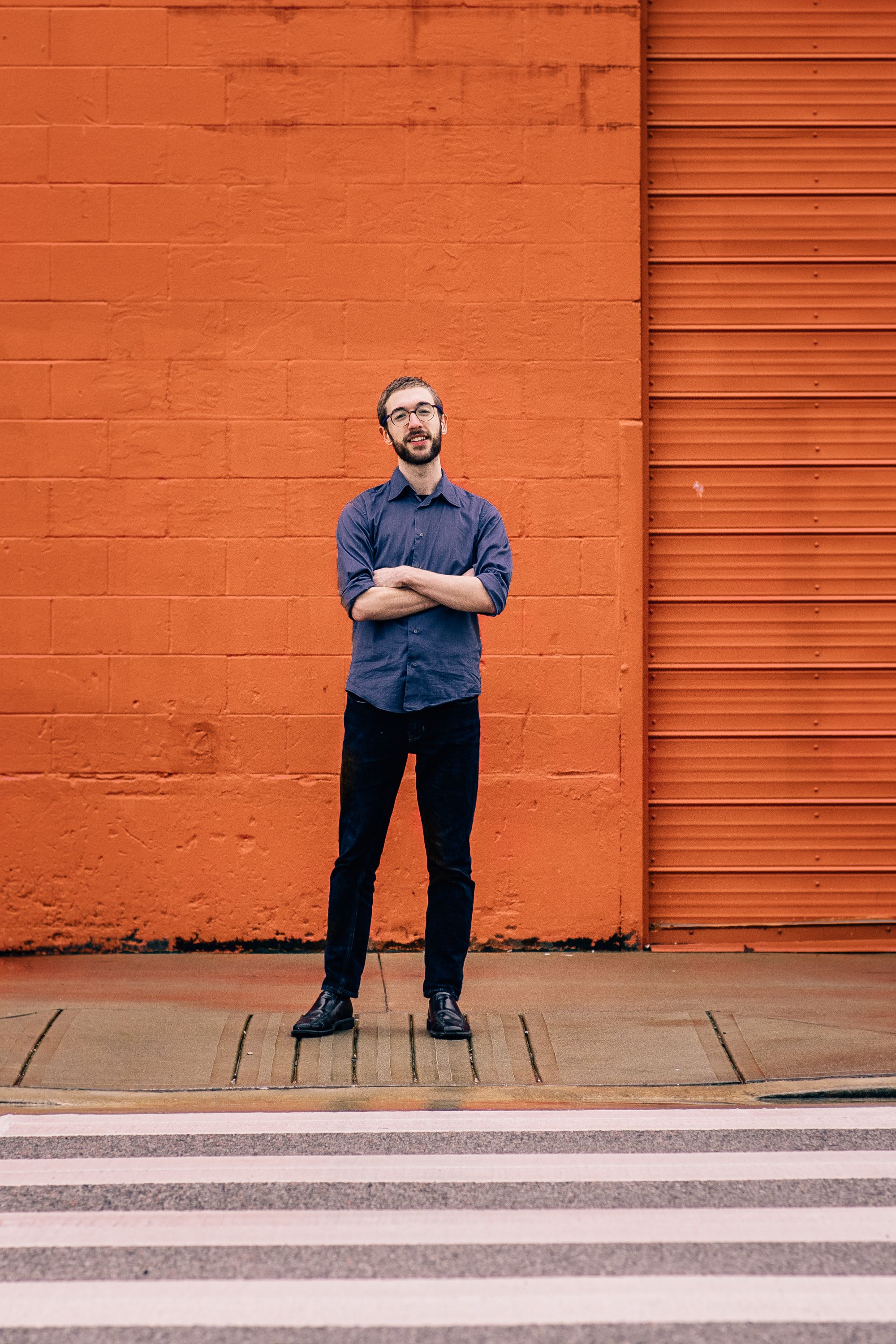
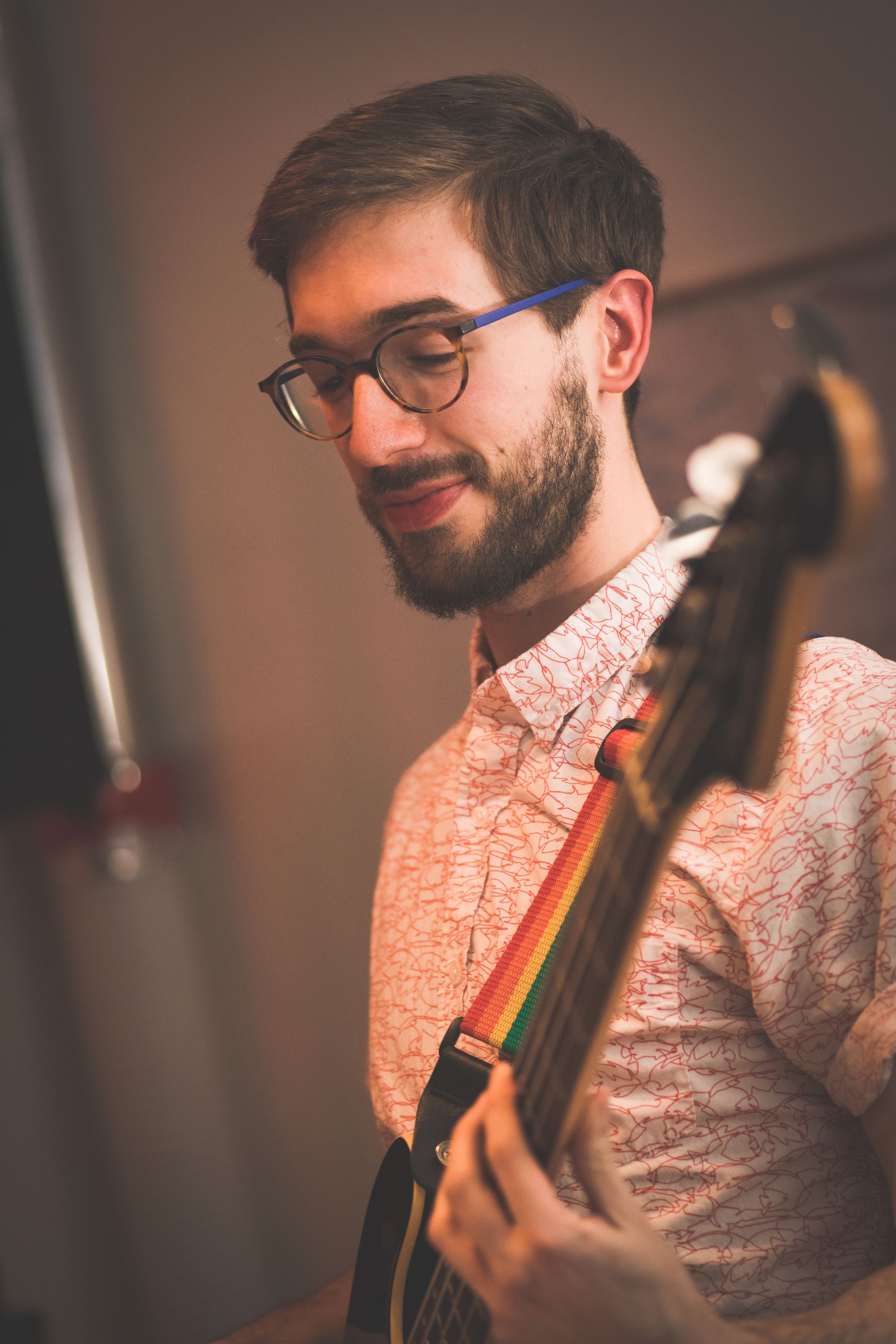
Photo from far by Elena Samuel, 2018; bassist photo by Oliviana Creative, 2019
Bio (2019)
William Chernoff is a composer, bassist, and independent artist who works with musicians in Vancouver, BC.
In 2013, at age 18, Will played his first concert as a bandleader: a tribute to Herbie Hancock’s Head Hunters. Will then took Bill Frisell as his major influence after he played Frisell's music for the guitarist in a 2014 educational workshop.
Living between Denmark and BC in 2015, Will wrote dozens of compositions and recorded some of them in two studio sessions. He later shared 5 tracks under the name William Ross Chernoff's Nomads and received over 5,000 downloads from the music library Free Music Archive, releasing under a Creative Commons license.
Despite having roots in the jazz community, Will launched his career in the folk music genre by co-founding the band Early Spirit, touring the Canadian folk festival circuit from 2017 to present. Will and Early Spirit released the album Unrelated in 2018; Will then released the debut single of his solo career, “Lutin", in 2019.
[2026 update - I see that the writing prompts have changed, and now it's a single 5,000-character text field. It still seems like the same sort of idea, though.]
Detail where you are in your career, and provide an overall strategy/plan for growth in the coming year. Describe your challenges, ambitions, and where you hope to be after your Artist Development Year. (2000 character limit)
During my teens and early twenties, I wrote over 100 instrumental jazz compositions. Influenced by Herbie Hancock and Bill Frisell, I found a trumpet-led, live quartet sound.
I have released an album and performed at folk festivals as part of a band, but few of my own compositions have reached the public. However, I earned over 5,000 downloads by sharing some of them under Creative Commons. Independent podcasts have used those tracks as theme music.
I have talented peers who love to play my music and encourage me to keep writing, and I aspire to do projects that help them build strong careers.
Ultimately, my goal is to be a prolific young composer in Canada and build an international, inter-generational audience for my music. I aim to sell out venues that promote Canadian jazz, strengthening local music scenes.
I recently released two singles and sold 45 tickets to a self-presented concert. These steps inspired me to stay true to my goal, and I decided to seek public arts funding to record more of my music.
During my Artist Development year, I will develop an audience of 120 people in Vancouver who will sell out my concert at a local jazz venue. These people enjoy hearing new jazz music regularly, and they want to follow the life of a young artist in depth.
To produce content for that audience, I will release eight new singles. I will record the singles in three days of studio time, and I will make my own daily online media content.
At the end of the year, I will leverage my library of eight to ten single releases. On a CD or other physical media, I can send them to local radio curators; and, on streaming, I can combine them into an album-like playlist that includes other artists' music. I will promote myself through physical media, online media ads, and word-of-mouth, acquiring members for an email newsletter. My plan aims to add enough of these members in Vancouver to draw 120 people to a local concert.
Describe how the development activities will contribute to your overall strategy/plan, and how they will help you achieve your artist development goals. (3000 character limit)
I record my music live-off-the-floor, and I can track up to five compositions per day of studio time. In the Artist Development year, I will book up to three days of studio time. Costs include studio rental, mixing, mastering, cover art, and session musicians. My sound recording budget is $7,500 for the year.
This investment in sound recording starts my planned release cycle of one single per month. I aim to build a community, growing it month-over-month, of people who enjoy hearing new music often.
The community’s main channel is an email newsletter. People can join the newsletter on a new website, williamchernoff.com. My goal is for 30 newsletter members to join per month on average.
Using physical media, I can make business cards that show the URL, handing them to interested people at Vancouver jazz events. Making posters that promote my single releases can also drive awareness every month, both in advance of and following each release.
Online media advertising allows me to target thousands of people in the Vancouver area. Facebook videos, Instagram photos, Instagram stories, and YouTube videos can document my life as a young artist and introduce new people to my art. Additionally, online media organic content can entertain my audiences on those platforms plus LinkedIn, Reddit, Snapchat, TikTok, etc.
Word-of-mouth remains powerful. Following up with interested people and encouraging them to share my music can multiply my effort. I also enjoy keeping in touch with jazz students at universities across Canada, sharing our projects.
I set a marketing budget of $300 per month for acquiring newsletter members. My marketing budget for the Artist Development year is therefore $3,600.
The video production budget is for hiring amateurs to document what I do when I can't document it myself, such as while I produce recordings. The total of $900 for video allows for $300 per studio day.
Near the end of the year, I will collect the singles on a CD or other physical media and distribute them to local radio curators. By this time, I will have an email community that I can direct to listen to their radio stations. On streaming platforms, I will curate album-like playlists that mix all of my singles to date with my favourite tracks from other Canadian jazz artists. I will personally request each artist’s inclusion on the playlist, forming new relationships. The result is like an album, but with a changing track list that evolves to suit people’s tastes and needs.
Releasing eight new singles and adding over 300 newsletter members in 12 months will give my independent career a strong foundation. Then, I can confidently book and sell out a local performance of 120 people. I can compute the cost of acquiring a newsletter member and the conversion rate of emails to ticket sales, allowing me to move into other large Canadian cities. I can also explore the sync licensing revenue stream with my growing library of music.
Assessment Track
Budget
Sound Recording – estimated $7,500, actual $2,341.99
Marketing & Promotion – estimated $4,800, actual $840
Touring – estimated $200, actual 0
Showcasing – 0
Video Production – estimated $3,500, actual 0
Other Plans – 0
First completion filed on January 27, 2021
Describe what you did in your Artist Development year. 3000 character limit
I completed a recording session before the pandemic. This session produced five tracks, four of which I have released as singles: "Interdimensional Space Cat", "Reliable Friend", "Little Mylk", and "In Shadows". The fifth track, "Little Mylk (Discovery)", remains unreleased.
To produce these tracks, I hired and paid recording engineer Anthony Cenerini for one day of in-studio recording, as well as for mixing of four tracks. "Reliable Friend" was a solo performance that required no mixing.
I hired and paid four session musicians: Thad Bailey-Mai, Dean Thiessen, Carson Tworow, and Nebyu Yohannes. My Artist Donated Services are fully attributable to my own in-studio role for the session.
I paid for mastering of the four tracks that I have released as singles. This mastering includes paying for the LANDR mastering service with "Interdimensional Space Cat" and "Reliable Friend".
It also includes hiring and paying for the services of Railtown Mastering, who mastered "Little Mylk" and "In Shadows". I have not yet mastered the unreleased track, "Little Mylk (Discovery)".
My spending on Sound Recording is the cost of all of the above.
As per one of my key goals, I developed an audience of 120 people. This audience has the potential to sell out one of my concerts at a local jazz venue. They have enjoyed hearing my new jazz music regularly, and they follow my life as a young artist in depth.
To gather this audience, I launched my first website, williamchernoff.com. I added over 120 net newsletter members through the website during the year.
My spending on Marketing & Promotion is the cost of contracted freelance work on the website. That amount includes four hours of work in early 2020 by a local copywriter, Victoria Cowan, and a wide-ranging month of work in October 2020 in launching a Squarespace website.
I progressed toward becoming a recognized young artist in Canada's jazz scene and building an international, inter-generational audience.
Did you achieve your goals? What changed? Why? 3000 character limit
The pandemic destroyed many opportunities available from my October 2019 application for this program. The fact that my jazz music requires live-off-the-floor recording was first to fall away. Many genres of contemporary music have shifted to at-home or distributed recording in recent years, but my interpretation of jazz remains a studio-first genre that relies on live interaction. Although I suggested that I would book up to three days of studio time, I could not book those additional two possible days through the rest of 2020.
Regarding newsletter members, I didn't achieve my target of 300 members. I attribute this to the lack of in-person networking in Metro Vancouver through the pandemic. However, I feel confident about the 120-strong email audience I did build.
I found that my linear projection of 30 new members per month was inaccurate. A percentage growth rate of 10% per month, from a starting amount of under 40 newsletter members, more accurately describes my early-stage email growth.
I didn't produce physical media like business cards and posters, because in-person events shuttered to such a large extent.
Likewise, I couldn't afford to pay for other marketing initiatives in this project like online media advertising or hiring friends to shoot videos. I also couldn't afford to manufacture CDs for this project's music.
Regarding social media, I felt a shift in my experience with the Facebook products, YouTube, Snapchat, and Reddit around May 2020. For both tactical and personal reasons, I resolved to stop directing so much time toward these platforms. I deactivated from most of them for the time being, especially since October 2020. I'm pleased with the results so far, as I've found more time to develop my business. Additionally, I've lost nothing so far from the growth rate of my newsletter members despite the lack of social media content.
I found that Linkedin was not conducive to my professional music activity, so I didn't put any time toward the platform.
I didn't promote the project to radio in 2020, but in 2021, I did distribute "In Shadows" with a promotional onesheet to Canadian community radio stations via cold email.
Instead of curating my own playlists, I chose to learn best practices for submitting to existing curators' playlists. Therefore, "In Shadows" earned placements on a few small playlists as the result of my cold outreach.
Delivery Tracks
"Little Mylk (Discovery)"*, "Interdimensional Space Cat", and "Little Mylk" from 12th Street Quintet plus the single "In Shadows":
I also included "Reliable Friend" in the completion; currently, it is only available as a bonus track with the download of "In Shadows", which you can get for free via the above Bandcamp embed.
*"Little Mylk (Discovery)" was unreleased at the time of filing this completion; the other two tracks from 12th Street Quintet were out as singles. Interestingly,"Little Mylk (Discovery)" later became the most successful release of the lot.
Other submission materials for completion
...on to part 2!
Part 2
Second application filed on May 27, 2021
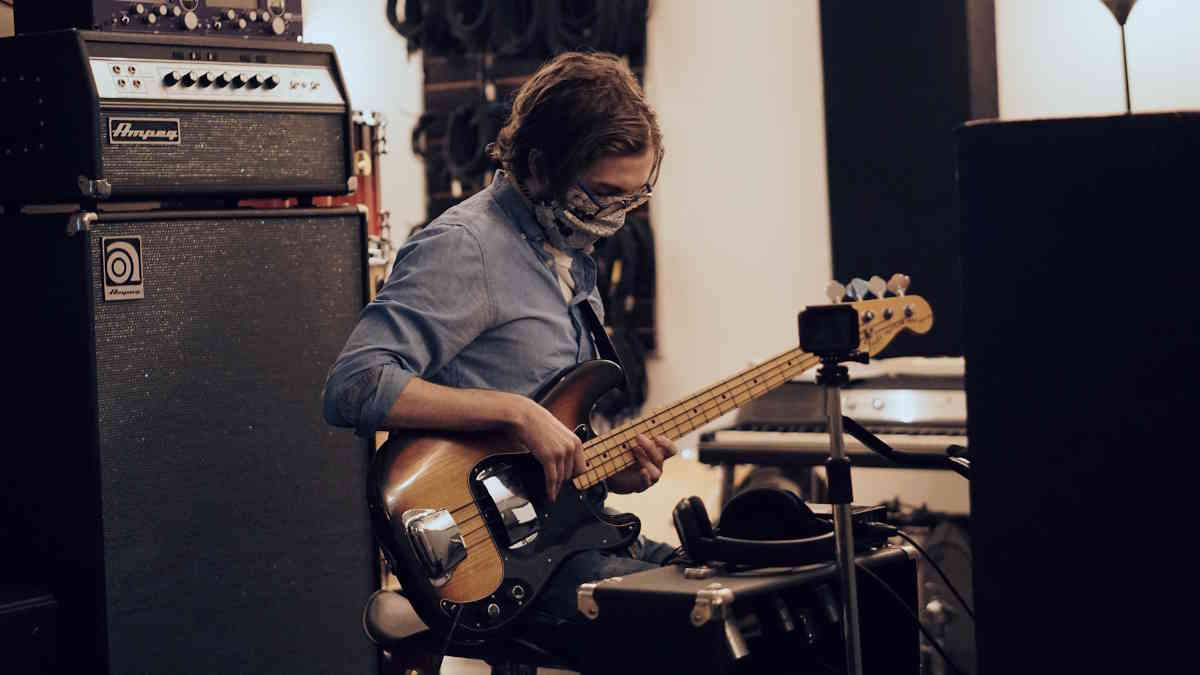
Photo by Anthony Cenerini, 2021
Before we get into the second application, special thanks to Nicolle Dupas, whom I hired in spring 2021 to review it with me: credit goes to you for helping make it successful.
Bio (2021)
Vancouver-based electric bassist and composer William Chernoff is an independent artist who presents all-original music. Will's most-heard recordings to date are the Bill Frisell-inspired instrumental "Little Mylk (Discovery)" and the funk tune "Lutin" which recalls Herbie Hancock.
Will currently performs in a trumpet-piano-bass-drums quartet. He has previously worked as a hired bassist with Canadian jazz artists including Brad Turner, Phil Dwyer, Bria Skonberg, David Blake, Laura Crema, and Sharon Minemoto.
Will's first non-commercial quartet recordings earned placements in short films, YouTubers' videos, and podcasts. Since launching his solo career in 2019, Will has released an album, Aim to Stay, and multiple EPs and collaborative singles. His music has received critical acclaim as well as airplay on CBC’s Saturday Night Jazz, CKUA's A Time For Jazz, and Jazz Boulevard.
Detail where you are in your career, and provide an overall strategy/plan for growth in the coming year. Describe your challenges, ambitions, and where you hope to be after your Artist Development Year. (2000 character limit)
Through my next year of content marketing, I plan to grow my customers from 120 to 600. I will release eight jazz guitar trio tracks in that time.
My first 120 customers came from writing last year. Across multiple websites, I wrote about music business from an artist's view. I did it while releasing a jazz quartet album, three EPs, and singles.
My customers so far are mostly musician-listeners. They keep in touch via email if they enjoy my writing. And if my music inspires them, they pay me to show support.
Of these 120 customers, 60 of them paid for tickets to 2020 concerts, hearing me at two Vancouver venues. Another 50 paid for my music either on CD or download. The final ten pay for monthly subscriptions to all my best work.
My biggest challenge is obscurity. It comes with my tactics: I value owned content above all. Avoiding most social media, I write every day and publish on my websites four days a week. The diligence that I need for this writing regimen is a challenge unto itself.
When I have strayed from these tactics, I have suffered. Canadian jazz has thousands of musician-listeners who have not yet heard me; to try reaching them, I paid for a publicist. I led an expensive album campaign, accruing costs that didn't match my nascent audience.
My key hypothesis is that my quartet music has not had a high enough quality. Consider my writing: people share it when they find it useful or fun. What makes jazz musician-listeners share my music? High quality.
My ambition is to raise quality across frequent music releases. This has worked for me in recent months. Two of my EPs, Quartet Reunion and 12th Street Quintet, earned support from community radio, playlist curators, and Spotify editorial.
I recently started a guitar trio and recorded it for one day, making four new tracks. The music sounds more straightforward, swinging, and lively than the cerebral quartet.
It’s now time for me to book a second day to record this trio, getting to eight total tracks.
Describe how the development activities will contribute to your overall strategy/plan, and how they will help you achieve your artist development goals. (3000 character limit)
I can record four of my tunes in one day of studio time. 12TH ST Sound in New Westminster is my studio of choice because it worked for my previous Artist Development year (see letter of support). I recently started my guitar trio there; with Francis Henson on guitar and Carson Tworow on drums, I made my assessment track plus three others.
Henson, Tworow, and I will make four more tracks in another day with engineer Anthony Cenerini, who will also mix. The tunes I plan to record are already familiar to the trio, so we will not rent a rehearsal space or any equipment.
I will hire Andrew Downton of Railtown Mastering to make digital masters of the four new tracks. I can then release them over the next year alongside the other four tracks.
The above costs together with my Artist Donated Services comprise my sound recording budget of $2,700.
The eight new guitar trio tracks will help me grow from 120 to 600 customers in the next year. I have already set a consistent frequency for both my writing, which is my primary marketing, and my music releases. The compounding of my written content will drive more new customers this year than last. Because I will now raise the quality of my music, I believe that my audience will share it more widely.
If the customer base keeps its proportions as it grows, I would add 300 concertgoers, 250 music buyers, and 50 paid subscribers through the next year.
Regarding concertgoers, my trio will likely not perform live during the year except if the TD Vancouver International Jazz Festival adds us to its 2022 roster. To account for that, I will add a touring expense of $400 in hopes of paying Henson and Tworow $200 each to join me there.
That opportunity notwithstanding, I plan to reach the 300 new concertgoers through a mix of online events and small local venues. Bandcamp Live is a tool that will help me present often, and I expect to perform at two to five civic festivals in the next 12 months.
To serve 250 new music buyers, I will release singles and then two EPs. Key marketing materials I will make and use are PDF art packages, radio onesheets, PDF posters, promotional emails, and my web pages.
I will pitch to Canadian community radio, Bandcamp Daily, and international online communities. Cenerini's in-studio photography will supply the cover images for releases.
Finally, the 50 paid subscribers are the people who spend the longest duration in my audience. Rather than adding this many people, I might raise the prices for new subscribers.
My planned marketing and promotion spend for the year is a sum total of software expenses. The costs are not Canadian, so I do not claim them toward my total eligible expense. They include the email software ConvertKit, a website, music distribution with DistroKid, and Bandcamp for Labels.
Regarding video, I have no spending planned and can film, record and edit live videos of the band myself when appropriate. Video is a future area to improve, but I will focus for now on the music.
Assessment Track
"A Four-Way in the Heart of the West End", now available on Maybe Eventually:
Budget
Sound Recording – estimated $2,700, actual $2,574
Marketing & Promotion – estimated $1,100, actual $165.98
Touring – estimated $400, actual 0
Showcasing – 0
Video Production - 0
Other Plans – estimated 0, actual $644.79
Second completion filed on September 28, 2022
Describe what you did in your Artist Development year. 3000 character limit
I completed a recording session in the fall of 2021 en route to further audience-building throughout this year. The session produced four tracks, all unreleased at this time: “Fulton Street Blues”, “Esh”, “Maybe Eventually”, and “Waltz for John McGann”.
To record and mix these tracks, Anthony Cenerini completed one day of in-studio recording as well as four final mix deliverables.
Recording with Anthony at his studio, 12TH ST Sound, was important; this was where my guitar trio with Francis Henson on guitar and Carson Tworow on drums began. Anthony, Francis, and Carson captured their sounds more expertly than last time with the benefit of experience.
All four mixes were mastered by Andrew Downton at Railtown Mastering, with all four digital-only mastering deliverables now in hand.
All tracks are instrumental and feature the same session musicians, Francis Henson and Carson Tworow, each paid for one day of their time at a day rate. My Artist Donated Services are fully attributable to my own in-studio role for the session.
My spending on Sound Recording is the cost of all of the above.
I have begun promotion of the new music as part of an album release, planned for October 28, 2022. On my own time at no cost, I have pitched 14 media outlets, most notably Bandcamp Daily, the music website Dominionated, and several campus and community radio stations with whom I have relationships. I plan to pitch between 5 and 25 more Canadian outlets; the onesheet and press release I am using are attached. I also direct the recipients to the electronic press kit on my artist website at williamchernoff.com/epk.
Francis Henson, Carson Tworow, and I have been rehearsing to prepare for future and pending performances. I accrued several small expenses from Canadian vendors as part of working on this music with the trio, including setup and repair work on my instruments by a local luthier, and purchase of a mic stand to allow for rehearsal ‘demo’ grade recording in my home space. These costs are subtotaled in the Other Plans figure.
The Marketing & Promotion subtotal figure is the sum of my relevant software expenses from Canadian vendors, including essential email and domain service charges.
At the start of this Artist Development year, I was relatively unknown. But at this point, being known by many jazz musicians and fans in British Columbia for my writing and music alike, the most important challenge has been to improve the quality of my recorded works.
This project has allowed me to produce my highest-quality collection of four tracks yet, which should encourage my fans to share the music at higher rates than in the past. I’m most thankful to have been able to further my relationships with excellent local collaborators, going from an initial four tracks with this group of personnel to now eight.
Did you achieve your goals? What changed? Why? 3000 character limit
Thankfully, my estimate of how much material I can record in one day of studio time remained accurate, with four tracks produced from the one day of live-off-the-floor recording. Mainstream jazz is an interesting music genre to produce at high quality on a relatively low budget, and my team has been quite capable to help an emerging artist like me in the genre.
While I remained pessimistic about social media at the start of the Artist Development year, I returned to Facebook and Instagram as I produced more content; mainly because other artists, with whom I collaborated or featured, wanted easy ways to share my content and tag back to me on those platforms. I will continue to use these social accounts.
Regarding audience-building, my goal was to gather an audience of 600 customers throughout this Artist Development year; segmented roughly into targets of 300 ticketbuyers for my live performances, 250 music purchasers, and 50 subscribers with recurring payments. I based these segment estimates on my customers in 2020.
If net email sign-ups is a rough proxy for customers, I have already accomplished the total goal. The following are my thoughts on the progress made towards the segments’ targets.
I did not win acceptance into the 2022 Vancouver International Jazz Festival lineup, and have no currently confirmed performance bookings. However, I have leads on booking multiple performances in British Columbia, with the majority in Vancouver, heading into 2023. I believe that across roughly 6 performances, I am on track for 300 ticketbuyers around this new music release via an estimated 50 ticket sales per performance.
The 250 music purchaser target is uncertain. It is possible through a combination of ‘offstage’ sales at future performances as well as the digital release of my new tracks on Bandcamp. I did not manage to arrange design of a digital art package, though it’s unclear whether this anticipated asset I had in mind would directly lead to future sales. I will design one myself to accompany the music's release.
I am surprised but pleased to report that I exceeded the paid subscriber target, though I did so in an unorthodox way, allowing people to take out subscriptions to Rhythm Changes, the Canadian music website I run. This method is better than the Bandcamp subscription offering that I had used, as I save over 15% in fees to Bandcamp.
I successfully redirected subscribers to support my music through this new method. My identity as a writer is tied closely into my artist identity, and these subscribers not only know me personally but also listen to my music. They will be key fans throughout the future release of these new tracks.
In conclusion, I believe that not only am I already in the range of several hundred customers, I will have opportunities directly following my new tracks that should allow me to convert a few hundred actual customers.
Delivery Tracks
"A Four Way in the Heart of the West End"*, "Esh", "Fulton Street Blues", "Maybe Eventually", "Waltz for John McGann" from Maybe Eventually:
*What I used as the assessment track was a LANDR master / basically a rough version of the track; the delivery track was the final version as heard on the album.
Other submission materials for completion
That's everything FACTOR Artist Development that I've done.
I wish more artists would publish their work and open the hood like this...
Maybe this is one step on the way toward that future.